
Publicações
-
Simulation of the operation of an 18-meter electric bus on routes in Santiago, Chile
This report presents a simulation of the operation of an 18-meter electric bus in Santiago, Chile, with the objective of analyzing the viability of this vehicle type in the Red Metropolitana de Movilidad (Red), the municipal public transportation system. In 2019, the Ministry of Transport and Telecommunications of Chile began the process of decarbonizing public [...]
2024Articlee-busesLatin America
ES -
Electric bus pilots in the public transportation system of the city of Medellín
This report presents the conclusions obtained from the zero-emission bus pilots carried out for the companies Flota Nueva Villa and Expreso Campo Valdés, as well as the lessons learned in similar new vehicular technology testing processes in the city of Medellín and the other municipalities that make up the Metropolitan Area of the Aburrá Valley. [...]
Leia mais... from Electric bus pilots in the public transportation system of the city of Medellín
2024ArticleCase StudyColombiae-busespilot
ES -
Quantifying avoided greenhouse gas emissions by E-Buses in Latin America: a simplified life-cycle assessment methodology
The E-Bus Radar platform (www.ebusradar.org) monitors the implementation of battery electric buses (BEBs) and trolleybuses in the public transport systems of Latin American cities, and their associated reductions in greenhouse gas emissions compared to conventional models. The platform was created and is maintained by the Zero Emission Bus Rapid-deployment Accelerator (ZEBRA) partnership, co-led by the [...]
2024Articlee-buses
PT EN ES -

Financing e-buses in São Paulo: the partial subvention model
This paper summarises the main financial, legal, contractual and operational aspects that allowed São Paulo to develop and implement the partial subvention modelto finance e-buses. [...]
Leia mais... from Financing e-buses in São Paulo: the partial subvention model
2024Case StudyBrazile-busesfinanceLatin America
PT EN ES -
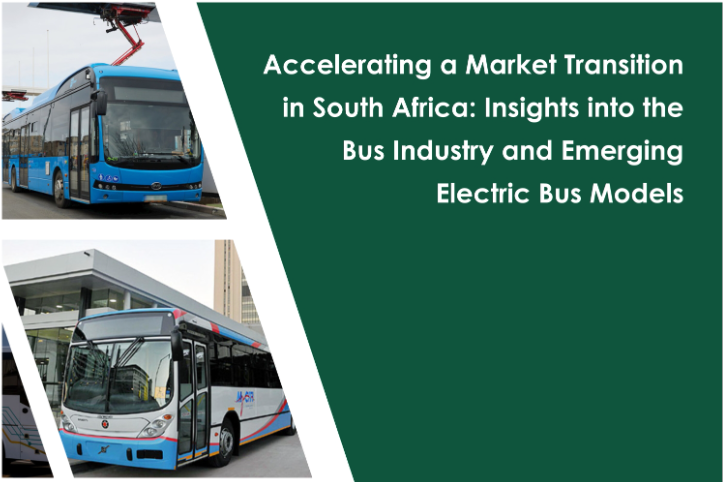
Accelerating a market transition in South Africa: Insights into the bus industry and emerging electric bus models
Focusing on Durban, Cape Town, Ekurhuleni, Johannesburg and Tshwane, this explains the current bus and electric bus (e-bus) landscape in South Africa, e-bus market potential, and models to accelerate e-bus deployment. More specifically, it presents the results of research examining bus ownership and service provision models, key stakeholders in both public and private sectors, the [...]
2024Reporte-busesMarketSouth Africa
EN