Generación de información técnica y financiera a partir del desarrollo de pruebas piloto de buses eléctricos en ciudades intermedias de Colombia
This report presents the results of pilot tests conducted with electric buses in intermediate cities in Colombia—Montería, Sincelejo, Ibagué, and Armenia—as well as in Medellín, under the ZEBRA initiative. The collected data demonstrate the technical and financial viability of zero-emission technology, with energy consumption ranging from 0.42 to 0.64 kWh/km and sufficient range for urban operations (176–296 km). The Total Cost of Ownership (TCO) analysis reveals that although the initial investment is higher, electric buses can reduce operational costs by up to 10% compared to diesel buses, thanks to savings in fuel and maintenance, and an energy regeneration rate of 32–38%. The study highlights the importance of charging infrastructure, operator training, and public support to drive the transition to sustainable transport in Colombia.
Related Publications
-

Implementation of Electric Buses in the City of São Paulo
-
Analysis of Electric Bus Performance Monitoring in Mexico City
-
Electric bus pilots in the public transportation system of the city of Medellín
-
Simulation of the operation of an 18-meter electric bus on routes in Santiago, Chile
-
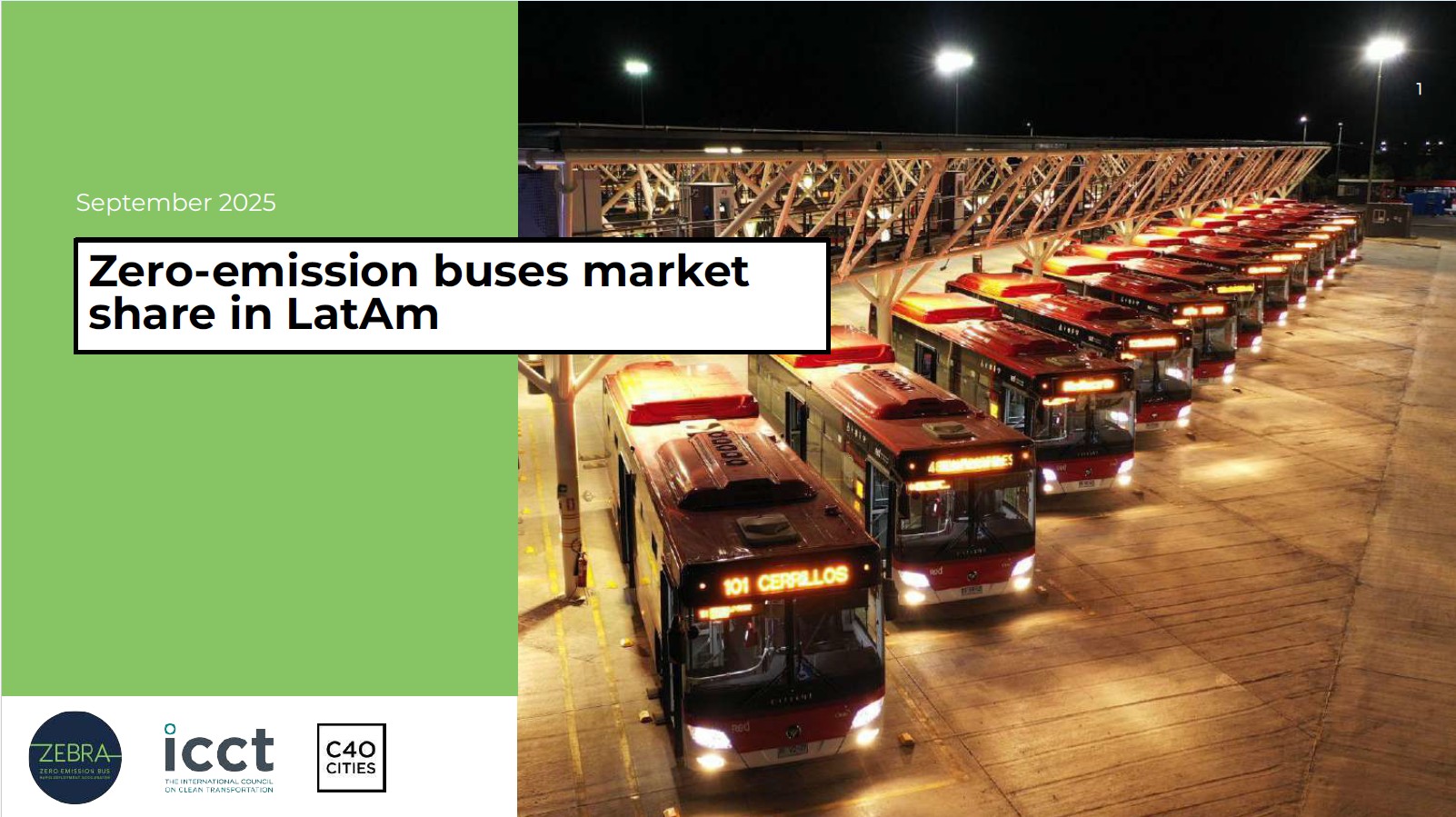
Zero-Emission Buses Market in Latin America